
What Shrinking LLM Traffic Really Means for Hotels
Prudence Marzinotto
What Shrinking LLM Traffic Really Means for Hotels
There’s a headline doing the rounds right now: “LLM traffic is shrinking.”
It sounds ominous, like AI’s promise to reshape digital marketing might already be fading. But dig deeper, and the story isn’t about decline. It’s about maturity.
We’re entering a new stage of digital discovery, one where large language models like ChatGPT, Gemini, and Perplexity aren’t killing search, but redefining how curiosity converts. For hotels, this is the moment to stop watching the AI conversation and start leading it.
Because the truth is simple: the way people find and choose hotels is changing, and the early movers will own that next wave.
The Numbers Show Evolution, Not Erosion
The data tells an interesting story. Across industries, traffic from LLMs and AI assistants remains tiny in volume (under 1%), but steady in performance, conversion rates of around 4.8%, almost identical to organic search at 4.6%.
In travel, organic still rules: roughly one in four bookings starts from an organic query. But the LLM layer, those conversational searches like “best boutique hotels in Sydney” or “eco stays near Hobart” is becoming the new top of funnel.
So yes, raw traffic may look down, but relevance is up. We’re trading volume for intent. That’s a good deal for any marketer focused on results, not vanity metrics.
AI Isn’t Replacing Search, It’s Rewiring It
When smartphones changed how people searched, it wasn’t the end of desktop traffic, it was the start of micro-moments: those “find it now” searches that reshaped SEO forever.
LLMs are creating a similar shift, from keywords to questions.
Guests aren’t typing “hotels Sydney” anymore; they’re asking:
- “Which Sydney hotels have great views but aren’t crazy expensive?”
- “Where can I stay near the harbour that’s quiet but walkable?”
These are contextual, emotional, and personal. That’s where your next guest is starting their journey.
The best part? AI assistants don’t invent data, they pull it from somewhere. That “somewhere” can be you if your content and structure are ready for it.
What Smart Hoteliers Are Doing Right Now
The most forward-thinking hotel marketers are designing for discovery.
Here’s how.
A. Speak the Language of Curiosity
AI assistants surface content that feels conversational and trustworthy. So, stop writing like a brochure, start writing like a guide. Turn your pages and blog posts into mini answers:
- “Top 5 hidden-gem restaurants near our hotel.”
- “Where to stay if you love coastal walks.”
- “What to pack for a Sydney weekend in winter.”
These aren’t just nice-to-haves, they’re LLM magnets. They position your brand as part of the conversation.
B. Make Data Do Double Duty
Schema markup, FAQs, and structured content aren’t just for Google anymore, they help AI tools understand context.
- Add schema for your rooms, amenities, and location.
- Include clear, question-led headers.
- Optimise for natural phrasing, not keyword stuffing.
You’re teaching the algorithm who you are.
C. Build Micro-Funnels, Not Monoliths
LLM traffic often arrives mid-journey, guests who already know what they want, but not where to get it.
Make sure your site meets them halfway:
- Short, visual landing pages with direct CTAs.
- Localised experiences (“What to do within 5 minutes of our hotel”).
- Quick comparison tools (“Choose your perfect room type”).
The goal? Convert “curious” into “clicking book.”
Insight: The Power Is Shifting to Context
Here’s the real takeaway: LLMs are accelerating a broader truth in digital marketing, context beats clicks.
Guests aren’t looking for more information; they’re looking for more clarity.
That means:
- Relevance over reach.
- Personalisation over promotion.
- Helpfulness over hype.
For hotels, that’s liberating. You don’t need to be everywhere, you just need to show up where it matters most, with information that feels real and local.
Want an example?
When an AI assistant compiles “five-star sustainable hotels near Hobart,” it isn’t counting backlinks, it’s evaluating confidence signals.
If your sustainability content includes verified certifications, measurable outcomes, recent media mentions, and structured data that reinforces those claims, you’re signalling both expertise and authenticity. That’s what earns trust in the new AI-driven discovery landscape, not noise, but proof.
Measurement: Rethink What Success Looks Like
In a world where traffic sources diversify, measuring by pageviews alone is like judging a hotel by its lobby.
Start tracking intent-based indicators:
- Scroll depth (are visitors reading?).
- Conversion assist rates (which content helps them decide?).
- Engagement from new referral domains (are AI tools sending traffic?).
Then act on it. If a blog about “romantic winter getaways” quietly drives five bookings a month, optimise it, expand it, and repurpose it into ads, socials, and email. That’s the compounding value of insight-driven marketing.
The Real Opportunity: Reclaiming Authority
LLMs have made information more accessible, but also more generic.
This is where hospitality can shine again.
Your hotel’s greatest asset isn’t just its location or amenities. It’s authority, the ability to answer guest questions better than anyone else.
Hotels that build trust through knowledge, authentic recommendations, insider guides, local expertise, will thrive in this AI-infused landscape. Assistants may start the search, but guests still finish it with a human connection
Action Over Anxiety
What should you do next week, not next year?
- Audit your content. Identify the pages that answer guest questions best.
- Add structure. FAQs, schema, conversational headings.
- Tell human stories. AI can’t replicate experience, use guest narratives, staff insights, local flavour.
- Activate AI Source. Treat AI Source as your new discovery engine, it connects your hotel’s content, offers, and brand story directly into AI-driven search journeys. By syncing structured data and authentic messaging, you ensure your property shows up where guests are already asking questions.
- Test and track. Watch where AI referrals appear, but don’t obsess. Look for patterns, not panic.
- Keep showing up. AI will evolve, but consistent, useful content always wins.
The hotels that treat this shift as an experiment, not an existential threat, will pull ahead fast.
The Big Picture
Traffic is a number. Intent is a signal.
This isn’t the decline of discovery. It’s the refinement of it.
For hotels that adapt now, refining SEO, layering in AI-friendly content, and focusing on clarity and confidence, 2026 won’t just bring new traffic sources. It’ll bring more bookings that stick.
Because visibility matters. But relevance wins.

Prudence Marzinotto
With 20+ years in hospitality of all facets, including F&B, hotels, to a refined focus on hospitality digital marketing.
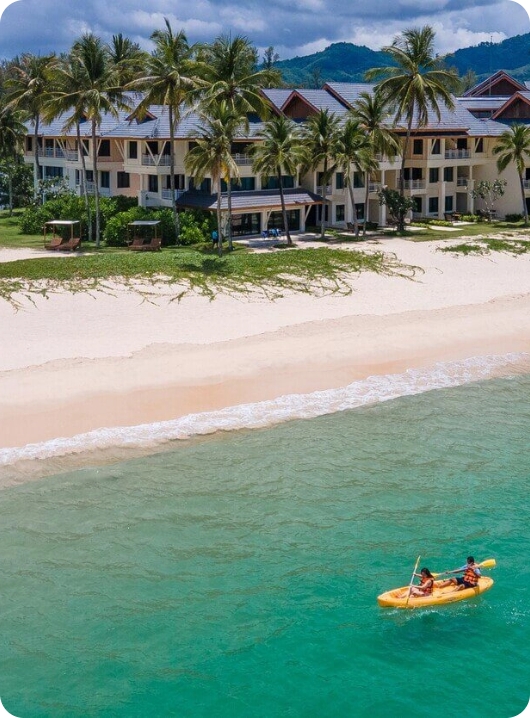
Transforming SAii Laguna Phuket
Projecting
SUCCESS.
+$765,120
Additional direct revenue, first 12-months.
“Working with HyperHotels has been transformative for us. Their revenue projections brought clarity and confidence, making it easy to secure buy-in from stakeholders. Their expertise turned a complex proposal into an actionable plan—and the results are exceeding what was projected!”

MARE TRENESKI
Portfolio Director of Sales & Marketing
Salter Brothers