
Transforming Swissôtel Sydney
Why Your Hotel Needs a Search Specialist
Michael MacDonald
Director at OmniHyper
Oct 13, 2026
11 MIN READ
Why Your Hotel Needs a Search Specialist
Too many hotels hand their search to an agency that is all things to all people. Social, paid media, design, PR, websites, and search somewhere on the list. It sounds efficient. For search, it rarely is.
For most hotels, search is still where the guest journey begins, but how guests search has changed. AI Overviews now sit at the top of a large and growing share of Google searches. Our own analysis, by Mae, our AI strategist, shows the click rate for the number one organic position falling from 31.8% to 11.2% when an AI Overview is present.
Guests are asking ChatGPT and Gemini where to stay, and getting a short list of hotels back. Being on that list is not enough. If the AI names your hotel but cites an OTA as its source, the guest who follows that link lands on the OTA, increasing the chance that the booking goes with it.
That is why who you trust with search matters more now than it did three years ago.
Search Is Now Three Specialisms
Organic search, the part you do not pay per click for, is no longer one job. It is three.
LOCAL SEARCH
Win the guest who is nearby or exploring the area.
Local SEO. Be found in Google Maps and the local pack.
TRADITIONAL SEARCH
Win the guest who is searching and planning.
Traditional SEO. Be found in the organic
AI SEARCH
Win the guest who is asking Al where to stay.
AEO. Answer engine optimisation. Be the answer.
GEO. Generative engine optimisation.
Be the source it cites.
Same commercial objective. Different guest behaviour, different work, different measurement.
Local search wins the guest who is nearby or exploring the area, through Google Maps and your Google Business Profile. Traditional search wins the guest planning a trip, through the organic results. AI search wins the guest asking ChatGPT or Gemini where to stay, and decides whether the answer cites your website or an OTA.
Each has its own work, its own timeline and its own measurement, built on shared foundations of technical health, content and authority. A specialist works on all three, every day. A generalist is being asked to master all three as a side job.
Blend them into one generic SEO package and you do not get something simpler. You get something average at all three.
Your Competitor Hired a Specialist. Did You?
For a generalist agency, search is one line on the invoice, handled by people who split their week across every other service.
Now picture your main competitor working with a search specialist. You are both chasing the same guests, in the same city, on the same search results and the same AI answers, and only a few hotels make the cut. With a generalist behind you, it is very hard to get any cut-through.
Smaller or budget-conscious hotels are no exception. Start small and focused, not generic. Pick the one search job most likely to move direct bookings, get some results on the table, then build from there. Whatever your size, keep your Google Business Profile complete, fix obvious technical errors and keep your website content accurate.
Search is changing fast. The work that held page one in 2023 does not make a hotel the answer in ChatGPT in 2026. A specialist spends every day on that problem, tests new approaches early, and can explain why a number moved.
Here is what that looks like in practice.
The Difference It Makes
A hotel in Melbourne, in one of Australia’s most competitive markets, had effectively no presence in AI answers and an average Google position on page three. We deployed two of our solutions, Helium for traditional search and AI Source for AI search.
Over eight months, compared with the same period the year before, its average Google position moved to page one and held there every month. Despite improved rankings, clicks from Google fell 33.7%, a reminder that page-one visibility alone does not guarantee website visits. That is where AI search comes in. Over the same period, total website sessions rose 203% and ChatGPT referral traffic rose 236%.
In a year when occupancy was essentially flat, the hotel’s own channel reporting showed direct revenue up 38.3%, and the direct share of public room revenue rising from 37.3% to 45.9%, won from the OTA channel.
Read the full case study: Capturing New Demand Through AI-Driven Search
Five Questions to Ask Any Agency
Ask these of every agency on your shortlist, including us.
- Is search your core business, or one service among many?
- How do you treat local, traditional and AI search differently?
- How do you check whether our hotel appears in ChatGPT, Gemini and AI Overviews, and how does that compare with our competitors?
- How do you connect search activity to direct bookings and revenue?
- What have you changed in your approach in the last 12 months, and why?
Red Flags
- Rankings are the headline number, with nothing on bookings or revenue.
- AI search is a slide in the pitch, not a defined piece of work with its own measurement.
- Guaranteed positions or results within a fixed number of weeks.
- The same monthly report, whatever happened that month.
Specialised Once, or Twice?
Knowing search is half the job. A search specialist who does not understand hotels will still miss the booking engine tracking, the brand standards and the OTA mix. I cover that side in the companion piece, Why Your Hotel Needs a Hospitality Specialist.
Most agencies are specialised once. The best partner for a hotel is specialised twice: in search, and in hotels. Whoever you choose, ask them to show you where your hotel stands today across all three types of search, and what they would change first.
Frequently Asked Questions
What is the difference between SEO, AEO and GEO?
The terms overlap and are still settling. SEO (search engine optimisation) helps your hotel appear in traditional search results. AEO (answer engine optimisation) and GEO (generative engine optimisation) both describe improving your visibility in AI answers. The way we think about it, AEO is about being the answer, and GEO is about being the source that answer cites.
How do I know if my hotel appears in AI search?
Ask ChatGPT, Gemini and Google the questions your guests ask, such as the best hotel near a venue you are close to. One-off checks vary, so for a reliable picture, track your visibility over time and against your competitors.
How long does search take to show results?
It depends on the job. Across our hotel projects, local search typically shows early movement in 30 to 60 days. AI search typically shows quick wins in the first one to two months, with traction from months three to six. Traditional search typically takes six to nine months for meaningful movement. A good partner will tell you what to expect and when, and report against it.
Book a Free Hotel Growth Consultation
If you would like an honest view of how your hotel shows up across local, traditional and AI search today, and what would move it, book a free hotel growth consultation with our team.

Michael MacDonald
Director
With 25+ years in hotel digital marketing, Michael has driven success for Accor, IHG, and Marriott worldwide.
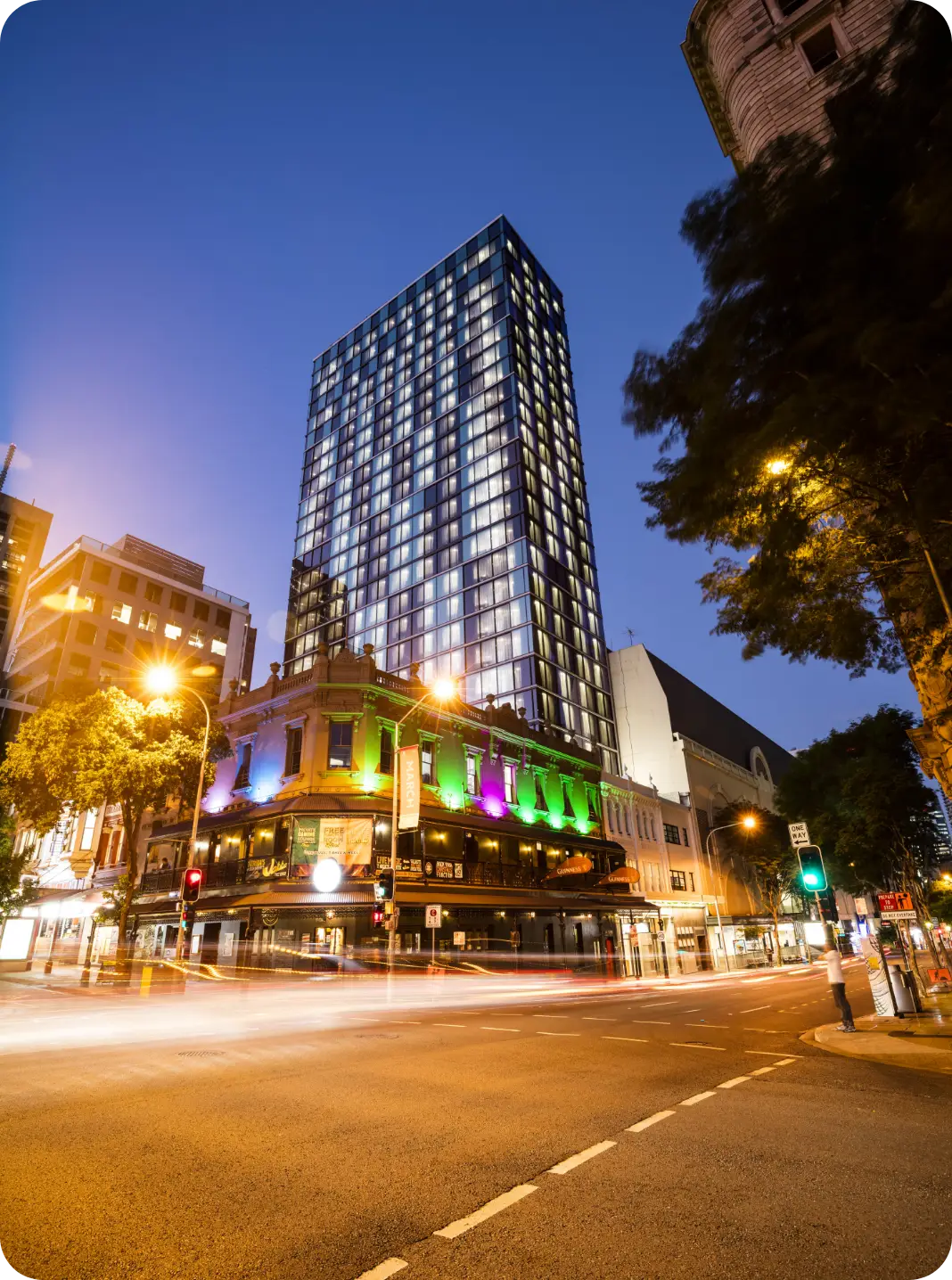
Transforming ibis Styles Brisbane Elizabeth Street
BREAKING RECORDS,
In Brisbane.
+$2,859,069
Achieved in 4-years.
“The strategy HyperHotels delivered for Darwin Airport Resorts was a game-changer. It brought our three properties under one unified vision and provided the clarity our board needed to confidently shape the future direction of our hotels.”

CHRIS CHAFFE
General Manager
Darwin Airport Resorts