
AHICE Asia Pacific 2026
AHICE Asia Pacific 2026: What We Saw, Heard, and Took Home
Michael MacDonald & Nick Hollows, OmniHyper — Adelaide, May 2026
May 12, 2026
11 MIN READ
AHICE Asia Pacific 2026: What We Saw, Heard, and Took Home
We just returned from two days at the AHICE Asia Pacific Conference in Adelaide — one of the hospitality industry’s most significant gatherings in the region. Here are our honest takeaways: the conversations that energised us, the gaps that surprised us, and the data points that every hotel leader should be paying attention to right now.
FIRST IMPRESSIONS
Adelaide punches well above its weight
The conference drew an impressive crowd — not just from across Australia, but from around the world. The calibre of stakeholders in the room was genuinely high, and the opportunity to get meaningful face time with senior leadership teams from major brands and ownership groups made the trip worthwhile on its own. For Nick, arriving early to experience South Australia’s hospitality scene firsthand only reinforced the point: Adelaide is doing something right. Two new hotels opening shortly, a rebrand of Peppers to Movenpick, and what is widely considered one of the country’s leading food and beverage scenes — everywhere we dined, hotel restaurants and external venues alike, the quality was exceptional.
The panels covered significant ground — technology, design, operations, leadership, food and beverage — and the conversation was largely constructive and forward-looking. That said, there’s an opportunity AHICE hasn’t fully unlocked yet. Masterclass-style, deep-dive educational sessions in each discipline would add real value alongside the broader panel conversations. The industry deserves more than headline statements — it deserves frameworks it can act on.
“It’s not necessarily about the deals getting done, but it’s the opportunity to connect with leadership teams around the country and globe — five minutes over a coffee is very, very valuable.
Nick Hollows, OmniHyper
THE DATA PICTURE
The numbers tell a strong story — if you know where to look
STR/CoStar’s Matthew Burke opened with a performance overview that set the tone. The headline: Australia enters 2026 from a genuine position of strength, and the data backs that up. Supply growth has been steadily slowing — sitting at just 0.8% in 2025 — and with demand continuing to grow, occupancy is hitting 2019 levels across major markets. That’s a structural tailwind, not a short-term blip.
There was also meaningful conversation about geopolitical uncertainty — specifically the conflict in the Middle East and what it means for travel. Of Australia’s ten largest inbound source markets, only one (the UK) requires routing through the Middle East. The immediate pain is more likely felt by Australians travelling outbound than by international visitors coming here. If anything, that dynamic strengthens the case for domestic demand remaining resilient, while international visitation holds up well from Asia-Pacific source markets.
+12.7%
Australia GOPPAR growth,
Q1 2026 vs Q1 2025
+8.3%
Australia TRevPAR growth,
Q1 2026 vs Q1 2025
+12.7%
Australia GOP margin,
Q1 2026 — up 1.3 pts YoY
Source: Duetto / HotStats, presented at AHICE 2026 by Shikha Menon, Director of Hotel Intelligence
Duetto’s Shikha Menon added further depth on the profit story. Across APAC, profit is growing faster than revenue — GOPPAR of +5.3% versus TRevPAR of +2.8% in FY2025. Australia’s GOP margins are recovering, and the Q1 2026 momentum is building. New Zealand led the ANZ region last quarter with GOPPAR growth of +22.1%. These are genuinely encouraging numbers.
The challenge underneath the headline, however, is labour. Australia’s labour cost per available room is now rising at +6.2% quarter-on-quarter — accelerating from +5% in FY2025 — driven in part by the Award & Closing Loopholes Act, with Hospitality Award increases from July 2025 hitting housekeeping and breakfast operations hardest. A&G costs are also surging at roughly five times the rate of revenue growth. Hotels that aren’t actively managing their cost structure risk seeing their hard-won revenue gains eroded.
THE CONVERSATION EVERYONE SHOULD BE HAVING
AI was everywhere — and almost entirely missing the point
If there was one theme that threaded through the conference — and one that left us with the most to say — it was artificial intelligence. AI was mentioned constantly. But the overwhelming focus was inward-looking: operational efficiency, productivity gains, time saved, staff hours reduced. All valid. All worth pursuing. But almost entirely incomplete as a picture of what AI actually means for hospitality right now.
David Bark of MOLFA put it bluntly: if you’re planning to engage with AI in your 2027 budget cycle, you’ve already missed the boat. His portfolio is being driven to operate dynamically in 2026. Roger Powell of THSA echoed similar thinking. And Anthony Stevens from EVT was, to his credit, one of the very few voices talking about agentic booking and machine-readable content — the infrastructure that will determine whether hotels show up when AI agents are doing the searching and the booking.
Michael Kinlock from SiteMinder made an observation we found striking: no one in the room was talking about the revenue opportunity. Hotels saving time with AI is useful. Hotels getting discovered through AI search — and converting that discovery into bookings — is transformational. The shift from SEO to AI-driven discovery is already happening. Roger Powell shared examples from his own portfolio, including work done with OmniHyper, where hotels are seeing real results from being properly positioned in AI search environments.
“If you’re planning on AI in your 2027 budget cycle, it’s too late. You need to be dynamic in 2026.”
David Bark, MOLFA — as referenced at AHICE 2026
Cendyn touched on discovery at a high level, and Accor shared that integrating their app into ChatGPT had doubled their bookings within that channel — though the practical barrier to adoption means the impact is concentrated among already loyal, tech-savvy guests. It’s not yet a mass-market story. But the direction of travel is unmistakable.
THE STRUCTURAL CHALLENGE
Budget cycles are the enemy of relevance
One of the most consistently raised frustrations across different sessions was the mismatch between how quickly the landscape is shifting and how slowly hotel organisations are structured to respond. The consensus was clear: twelve-month budget cycles are too slow. Waiting until next year’s planning cycle to address AI, distribution strategy, or customer acquisition is, in the current environment, a strategic error. Even three-to-six month cycles were described as potentially too slow given the pace of change in AI search.
The hotels and portfolios moving fastest are those that have found ways to build dynamism into their operating model — reviewing and adjusting strategy on a rolling basis rather than locking it in annually. This isn’t just about AI. It applies equally to distribution costs (credit card commissions in Australia are now growing at roughly double the rate of revenue), F&B positioning, and the increasingly complex labour compliance environment.
SUMMARY
Our five key takeaways
- Australia is in a strong position — profit is outpacing revenue — GOPPAR growing at +12.7% versus TRevPAR at +8.3% in Q1 2026. The fundamentals are sound. But rising labour costs (now +6.2% QoQ) and A&G blowouts are eating into those gains. Knowing your numbers in detail has never mattered more.
- The Middle East conflict is a headwind — mostly for outbound Australians — International inbound demand from Australia’s major source markets (New Zealand, China, UK, India, Japan, Korea) is largely unaffected by Middle East air travel disruptions. Domestic demand may actually strengthen as Australians redirect travel spend at home.
- AI is being discussed for the wrong reasons — The industry is focused on operational efficiency. The bigger opportunity — and the bigger risk of inaction — is in customer acquisition. AI search is changing how travellers discover and choose hotels, right now.
- If it’s in your 2027 budget, it’s too late — This was said directly at the conference and we believe it. Dynamic decision-making — reviewing strategy on a rolling three-month basis — is now a competitive necessity, not an aspiration.
- Food and beverage needs to be a destination, not an afterthought — One of the most resonant panel moments: F&B venues must elevate to become destination experiences. Australia’s F&B margins (14%) lag significantly behind Asia-Pacific peers. The hotels winning on this are those treating their restaurant and bar as a draw in its own right.
A GREAT EVENT — AND A LOT STILL LEFT UNSAID
Final thoughts
AHICE Asia Pacific 2026 was a well-run, well-attended event with genuine value in the room. The networking alone justified the trip. But we left with a strong sense that the industry conversation — particularly around AI and customer acquisition — hasn’t yet caught up with where the market is heading. That gap is, frankly, where we spend most of our time at OmniHyper. We hope to see it close at AHICE 2027.

Michael MacDonald
Director
With 25+ years in hotel digital marketing, Michael has driven success for Accor, IHG, and Marriott worldwide.

Nick Hollows
Partnerships Director
Nick Hollows is a hospitality commercial strategist focused on AI-driven growth for hotels across APAC. This article references findings from the Agilysys and HSMAI whitepaper From Data to Delight: How AI Is Powering Experiential Travel Across APAC (2026).
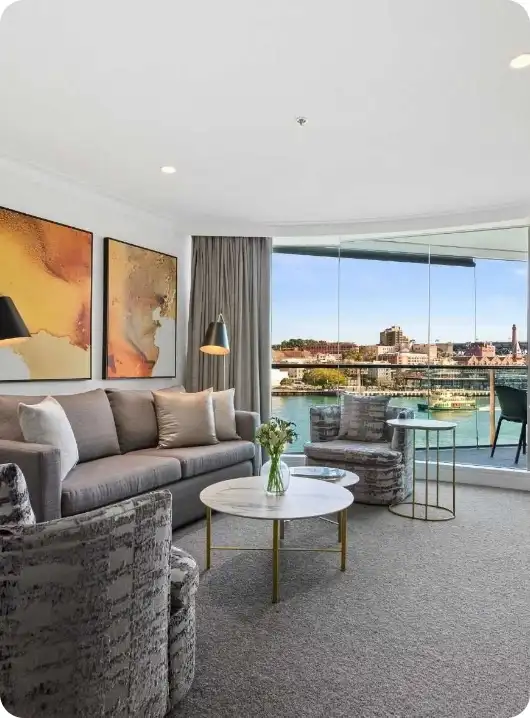
Transforming Pullman quay grand Sydney Harbour
HARBOURFRONT LUXURY,
REVENUE UNLOCKED.
+$1,363,219
Additional revenue, first 12-months.
“Working with HyperHotels for over 10 years has been a game changer for us. Their team truly understands the hospitality industry, and their website solutions have driven significant direct revenue growth. I couldn’t ask for a better partner to help us succeed online.”

DIANE KERINS
General Manager
Millennium Hotel & Resort Manuels Taupo
General Manager
Millennium Hotel & Resort Manuels Taupo