
Prudence Marzinotto
Microsites & Brand.com: Why Smart Hotels Need Both in 2026
When hoteliers talk about “their website,” they rarely mean brand.com.
In practice, their website is the hotel’s own microsite, the site they control, the one they use for marketing, the one that reflects the hotel’s personality, and the one they feel accountable for.
Brand.com is referred to as brand.com.
Important, yes. Increasingly seen as a strong corporate platform that provides brand consistency, global visibility, and high-level marketing support, while the hotel’s own microsite drives the day-to-day commercial focus on the ground.
In 2026, with AI-powered search reshaping guest behaviour and local discovery becoming the primary battleground, relying on either one alone is no longer enough.
Smart hotels are winning by running both:
Brand.com for brand trust and top-of-funnel influence.
Microsites for personalisation, relevance, and conversion.
Here’s the accurate breakdown of how the ecosystem works today.
Brand.com: The Global Umbrella
Every major hotel brand has its own version of brand.com:
-
- Crowne Plaza → ihg.com/crowneplaza.
- InterContinental → ihg.com/intercontinental.
- Pullman → pullman.accor.com.
- Sofitel → sofitel.accor.com.
These platforms are designed to:
-
- Represent the brand.
- Maintain brand visuals, tone, and standards.
- Drive global and national marketing campaigns.
- Funnel guests into the brand ecosystem.
- Compete with OTAs at the brand level.
Brand.com plays a critical role, providing the overarching brand presence and global strength that supports every property in the portfolio. Together, they create a complete and balanced digital ecosystem.
The Real Benefits of Brand.com
1. Brand Trust & Consistency
Brand.com sets the overarching narrative. It tells the world:
“We’re a recognised brand. We have standards. You can trust us.”
It is essential for:
-
- Global brand recognition.
- Loyalty members.
- Global/national traffic.
- High-intent travellers validating a brand.
Brand.com is designed for broad brand visibility, while deeper personalisation happens at the hotel level which is exactly where your microsite adds its unique strength.
2. Strong Domain Authority
Brand.com ranks well for:
-
- “[Brand] hotels”
- “[Brand] [city]”
- “[Hotel name]”
- High-level travel queries
But it does not rank strongly for:
-
- Specific local intent.
- Venue-specific keywords.
- Restaurant terms. Spa terms.
- Wedding or conference long-tail searches.
Brand.com builds the broader brand visibility.
Hotel Microsites: Personalisation Tool
Your hotel’s microsite is where personalisation, specificity, and commercial strategy come alive.
A microsite can reflect:
-
- The hotel’s unique character.
- Its location and community role.
- Its true brand positioning.
- The type of business the hotel wants to attract.
Microsites can be created for:
-
- The hotel itself.
- Spa.
- Restaurants.
- Weddings.
- MICE.
- Experiences / packages.
Microsites are not optional anymore; they are strategic visibility engines built for how guests search.
The Real Benefits of Microsites
Here are concrete actions for your hotel brand to lean into this shift:
1. Hyper-Local, Hyper-Specific SEO (That Brand.com Cannot Provide)
Hotel microsites can accurately target:
-
- Local demand.
- Niche categories.
- Long-tail, high-intent searches.
With AI search stepping in, specificity wins.
AI systems reward:
-
- Clear topical focus.
- Single-intent pages.
- Local relevance.
- Unique, authoritative answers.
2. AI Search Advantage: Being the Answer, Not an Option
Hotels increasingly win bookings when they become the answer to AI search queries.
AI platforms prefer microsites because they’re:
-
- Detailed in topics.
- Cleaner in structure.
- Easier to interpret.
This is one of the biggest competitive advantages hotels will see in 2026 and onwards.
3. Control, Flexibility & Commercial Agility
Microsites allow hotels to:
-
- Focus on their revenue goals.
- Shape their own priorities.
- Add localised content.
- Launch and test campaigns fast.
- Maximise ancillary revenue.
- Speak in their own tone of voice.
Microsites give hoteliers detailed control over their own narrative.
4.Higher Conversion for Non-Accommodation Revenue
Restaurants and spas inside hotels rarely outrank independent competitors and they won’t do it from the hotel microsite either.
That’s why they need their own microsites.
A spa microsite can rank for spa related demand.
A restaurant microsite can rank for restaurant related demand.
The hotel microsite cannot compete effectively in those categories.
The result?
More qualified traffic.
Shorter paths to book.
Less friction.
Higher revenue.
Why You Need Both: The Accurate, Modern Ecosystem
Hotels relying solely on brand.com experience:
-
- Little local relevance and visibility.
- Weak niche SEO.
- No AI-search specificity.
- Limited control over commercial priorities.
Hotels relying solely on microsites experience:
-
- Weaker trust.
- Limited national/global reach.
- No brand halo effect.
- Reduced loyalty funnel.
Hotels combining both win because:
-
- Brand.com provides trust, consistency, global reach.
- Microsites provide relevance, local visibility, and conversion.
Together, they form a high-performance digital ecosystem.
Together, they form a high-performance digital ecosystem.
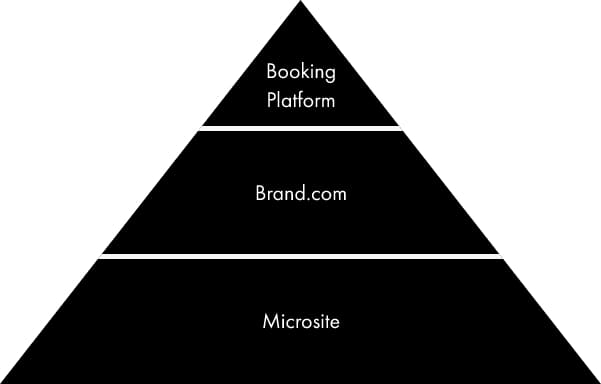
A modern hotel’s digital strategy should include:
-
- A polished, high-performing hotel microsite.
- A set of ancillary microsites (spa, dining).
- A strong, standards-led brand.com presence.
- AI-ready, intent-driven content.
- Clear, fast paths to book.
- Personalised local relevance.
- Alignment between brand standards and hotel-level identity.
Hotels who adopt this modular approach outperform those clinging to a single-site mindset.
The Bottom Line
Brand.com is the heart of the brand.
The microsite is the heartbeat of the hotel.
One builds global trust.
The other builds local demand.
One tells the brand story.
The other tells your story.
The real question isn’t:
“Should we use microsites or brand.com?”
It’s:
“Which parts of our business deserve their own visibility engine?”
Because the hotels answering that question are the ones growing direct revenue, while others quietly lose ground to OTAs, competitors, and local specialists.

Prudence Marzinotto
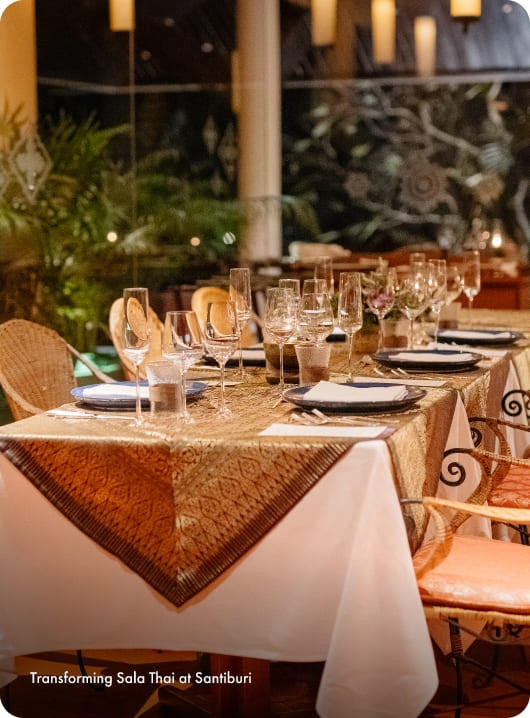
Spicing up the
BOTTOM LINE.
$620,779
Achieved in the first 12-months.17x ROI.
“We have seen an increase in external capture during both lunch and dinner, with external covers now contributing close to 70% of Boda’s capture.”

ZAC LUMSDEN
General Manager
Pullman Auckland Hotel & Apartments