
Transforming Novotel Sydney City Centre
New Zealand Has Stopped Talking About Recovery. Here Is What It Is Talking About Instead. AHICE Aotearoa 2026.
Nick Hollows
Partnerships Director, OmniHyper
Aug 17, 2026
14 MIN READ
New Zealand Has Stopped Talking About Recovery. Here Is What It Is Talking About Instead. AHICE Aotearoa 2026.
AHICE Aotearoa 2026: what I heard, what the data proved, and what it means for your hotel.
I have been to enough hotel conferences to know when the mood in a room has changed.
At AHICE Aotearoa in Christchurch this year, it had. Not in a loud way. Nobody stood on stage and declared victory. But across two days at Te Pae, in the sessions and just as much in the corridors, the conversation had quietly moved off one topic and onto another.
Twelve months ago, the question was when demand would come back. This year, nobody was asking that. The question had become who is going to capture it.
That is a very different conversation, and it changes what hotels should be doing right now.
First, a quick note on why I was there
For anyone unfamiliar with it, AHICE is the Australasian Hotel Industry Conference and Exhibition. The Aotearoa edition pulls together a genuine cross-section of the New Zealand market: owners, operators, GMs, the major brands, developers, investors and the people advising all of them.
That breadth is the point. It is not a marketing conference, or an investment conference, or an operations conference. You hear from people looking at the same industry through completely different lenses, which is exactly why it is worth the two days.
I went for two reasons. The first was simple. We work with hotels and hotel groups right across New Zealand, and having many of those people in one building is rare. Our usual conversations are focused on a single property, a single set of numbers, a single quarter. AHICE lets you have a wider one.
The second reason mattered more. I wanted to listen. If we are going to advise hotels on demand and visibility, we need to understand the commercial environment those decisions sit inside. Where owners are putting capital. What operators are worried about. What the people running these businesses think the next two years look like.
Here is what I took away.
The numbers are genuinely good, and they are broad
Matthew Burke’s STR and CoStar session gave the event its factual spine, and the headline was hard to argue with.
New Zealand hotel demand is growing at more than 6% year on year. Supply is growing at around 1%. Those two lines crossed in the middle of last year and have been moving apart ever since. That gap is the single most useful number in the entire deck, because it is the mechanical reason occupancy and rate are both moving in the right direction at the same time.
International arrivals are backing it up. Across New Zealand’s four largest source markets, arrivals hit 1.50 million, up 13.9% year on year and back to 95.4% of 2019 levels. Australia grew 13.2% and is now above where it was in 2019. The US is above 2019 too. China grew 35%, although it is still only back to around 77% of its 2019 volume, so there is more to come there.
One detail stuck with me more than the growth rates. Since Covid, it has become roughly 20% cheaper for an Australian to travel to New Zealand, and 10% cheaper in the past year alone. That is a structural tailwind sitting underneath the largest source market, and no individual hotel controls it.
The growth is also not confined to one city. Queenstown, Auckland, Christchurch, Wellington and Rotorua all posted positive occupancy and ADR movement year to date, and New Zealand’s RevPAR growth is running at roughly triple Australia’s. For a market that spent several years being described in terms of what it had lost, that is a real shift.
But a rising market does not lift every hotel equally
This is where I would caution anyone reading a summary of AHICE and concluding that the hard part is over.
The same data that shows strong year-on-year growth also shows that several markets have still not absorbed the supply added since 2019. Look back seven years instead of one and the picture changes. Occupancy in Auckland and Wellington is still behind where it was, and Wellington RevPAR is meaningfully behind. Rate has done the heavy lifting. Occupancy in parts of the country has not caught up.
The clearest illustration came when STR broke Auckland into three sub-markets: the Harbour, the Airport and the rest of the CBD. Compared to 2019, Harbour RevPAR is running more than 20% ahead. The rest of the CBD is close to 20% behind. Same city, same year, same demand environment, completely different outcomes.
That is the finding I would want every GM and commercial director in New Zealand to sit with. A market growing at 6% does not mean your hotel grows at 6%. Somebody is taking more than their share and somebody is taking less, and increasingly that is decided by who is visible when the traveller is choosing.
Wellington makes the same point differently. The headline numbers are positive and the second half of the week is performing well on the back of conference and events business. But the occupancy underneath those headlines is volatile week to week, forward bookings are mixed, and some of the repair has come from rooms permanently leaving the market rather than from demand alone. Auckland has its own version: forward occupancy for January 2027 is currently tracking about eight points behind where the same period sat last year.
Good conditions and easy conditions are not the same thing.
Events have become the demand story
If there was one theme that ran through both the data and the panels, it was events.
Christchurch is the obvious case study. Occupancy and rate have both been climbing steadily and the spikes line up almost perfectly with the event calendar. Weekend ADR growth there is running at double the midweek rate. STR described the forward outlook as very promising, particularly around March and April 2027. Auckland shows the same pattern: clear occupancy peaks around major events, converting straight into rate premiums.
There is also early evidence that the NZICC is doing what it was built to do. Auckland group occupancy has moved from 10.0% to 12.4% year on year, with contract business up as well. Group business tends to build slowly and then compound.
Here is the part I think gets underplayed. Event demand is not a rooms opportunity. It is a destination opportunity.
When a conference or a concert brings thousands of extra people into a city, those people are not only searching for a bed. They want somewhere to eat before the event, somewhere to drink after it, private dining for the group they are travelling with, and something to do on the day either side. A hotel with a restaurant, a bar and a function space has four or five ways to capture that visitor. Most only try to capture one.
The practical question is timing. If an event is on the calendar for March 2027 and you start building visibility in January 2027, you are competing on price against everyone else who left it late. The hotels that win those periods build relevance months before the booking curve steepens.
The commercial bar has moved, and it moved a while ago
The most useful session for me had nothing to do with digital.
It was the discussion on ownership and franchising, and specifically how the conversation between owners and brands has changed. It used to be a question of what a hotel needed to do to secure a brand. Now owners are asking a much blunter set of questions of anyone they pay. What are you doing for my hotel today to improve profit? What are you doing tomorrow to improve efficiency and operations? And where does this take my asset valuation in five or ten years?
One panel summed it up in three words: performance, performance, performance.
Every supplier to this industry should take that personally, and I include us. If our conversation with a hotel ends at rankings, sessions and impressions, we are answering a question nobody in that room was asking. Those are indicators. Useful ones. They are not the outcome.
STR closed on exactly this note, and it was the sharpest slide of the day. Between February and May, labour moved from 28% of revenue to 41%, and gross operating profit share shrank accordingly. Revenue is improving. Whether that converts into profit is a separate question, and it is the one owners are actually asking.
AI came up constantly, and one line was worth the trip
AI was everywhere, as it is at every conference now. Some of it was hype, and there was healthy scepticism on stage about governance, compliance and the gap between an impressive demo and something that works reliably in a live hotel.
But one line landed harder than anything else: content is king for AI.
The context was how these platforms actually build an answer. They ingest what is publicly available about your property and reassemble it. If that information is thin, outdated or inconsistent across your site, your listings and everywhere else you appear, the model will still produce an answer. It just will not be your answer.
Travellers are no longer only typing “hotel Christchurch” into a search box. They are asking where to stay near the convention centre, which Auckland hotel suits two adults and two children, which hotel restaurant is right for a client dinner. Those are questions about fit, not keywords, and a machine can only answer them if the information exists in a form it can understand.
That does not make traditional search irrelevant. If anything it raises the value of the fundamentals, because accuracy, structure and authority are now being read by machines as well as people.
Food is the story New Zealand is not telling loudly enough
The food and beverage discussion was the one I did not expect to be as good as it was.
The message was not that hotels need better restaurants. It was that successful hotel restaurants and bars increasingly have to work as destinations in their own right. The panels talked about finding the gap in the local market, building a genuine concept, developing a standalone brand, and earning relevance well beyond the guests already staying upstairs.
Hyatt’s contribution pushed that further. Hotel F&B was framed not simply as a revenue line but as a way to build local credibility, reputation and repeat custom, with Park Hyatt Auckland’s venues cited as examples of deliberately establishing their own street presence and identity.
There was a broader national opportunity in there too. As one speaker in the Accor session put it, the food story in New Zealand really does beg to be told. Local produce, local beverage, Indigenous cooking traditions, all of it capable of being a reason to travel rather than a footnote to the trip.
That feels timely, because it is already happening.
Te Kaahu at Te Arikinui Pullman Auckland Airport has built a reputation around Māori cuisine that has very little to do with being an airport hotel restaurant. BODA, on the top floor of Mövenpick Hotel Auckland, was awarded a Bib Gourmand in the inaugural MICHELIN Guide New Zealand. Neither of those is a story about accommodation. Both are venues people now seek out on their own terms.
I should declare an interest, because both are OmniHyper partners. In each case the brief includes destination marketing for the venue itself rather than for the hotel around it, and that is the part I would encourage other operators to look at.
The recognition matters less than what produces it. The potential audience for a hotel restaurant was never only the people sleeping upstairs. It is the local neighbourhood, the corporate market, celebrations, groups, event attendees and travellers who choose a destination for its food. Those audiences exist whether or not the venue is visible to them.
If your restaurant depends on room occupancy, it inherits every soft night the hotel has. If it earns a following of its own, it becomes a hedge against them. That is a commercial argument, not a marketing one.
What I am taking home
Five things.
New Zealand is a growth market again, and our conversations should sound like it.
Growth is uneven. Auckland Harbour versus the rest of the Auckland CBD is the proof. Share is won and lost inside a rising market.
Events are the clearest demand signal available and they are visible months in advance. Very few hotels act on them early enough.
Discovery has changed shape. Search still matters enormously, but it is now one part of how a traveller finds and chooses you.
And everything eventually gets judged commercially. Not on traffic. On whether it moved profit.
The opportunity really is returning to New Zealand hospitality. The work now is making sure our hotels are equipped to capture it.
If you want to talk through where your property sits against any of this, particularly the event calendar in your market over the next twelve months, get in touch. It is worth having that conversation before the booking curve decides it for you.

Nick Hollows
Partnership Director
Nick brings 15+ years of experience working with hundreds of hotels worldwide, helping drive performance and direct revenue. As Partnerships Director at OmniHyper, he’s known for his strategic and commercially focused approach.
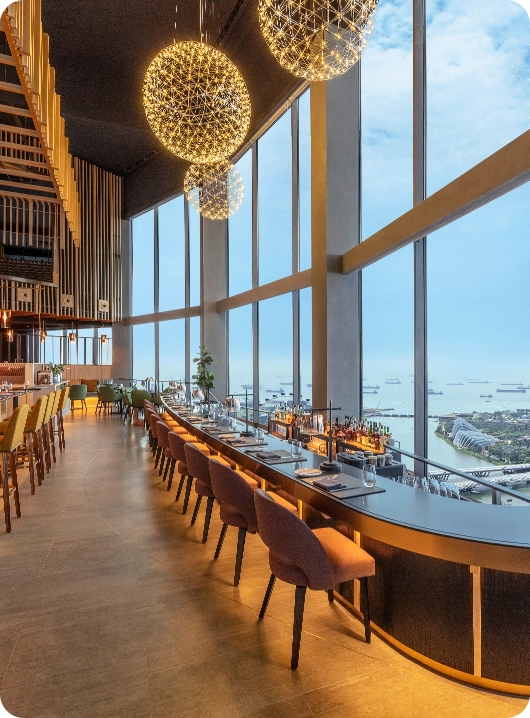
Transforming SKAI Restaurant & Bar,
Fairmont & Swissôtel The Stamford Singapore
Fairmont & Swissôtel The Stamford Singapore
ELEVATED VIEWS,
ELEVATED
REVENUE.
+$435,309
Additional revenue, first 12-months.
“HyperHotels has transformed our business. They instill confidence in planning, development, and reporting. Without them, we’d still be struggling with internal challenges. They offer clear, real-time insights and accountability, ensuring we’re on the right track with website management and SEO. I highly recommend them for a clear and confident web presence.”

BEN JAMIESON
Director of Sales
Pullman Sydney Airport
Director of Sales
Pullman Sydney Airport