
The Biggest Conversation Missing at AHICE South East Asia 2026
Michael MacDonald
Director at OmniHyper
The Biggest Conversation Missing at AHICE South East Asia 2026
The Asia Hotel Industry Conference & Exhibition (AHICE) South East Asia once again brought together some of the most influential voices in hospitality — hotel owners, operators, investors, tourism leaders and technology providers — to discuss the future of the industry across the region.
Held in Singapore, AHICE SEA 2026 delivered what it always does: a valuable opportunity to hear from industry leaders, understand investment trends and explore the technologies shaping hospitality.
But as often happens at conferences, the most interesting insight wasn’t necessarily what everyone was discussing. It was what wasn’t being discussed at all.
And this year, that gap revealed something important about where the hospitality industry may be heading next.
AI Is Dominating Hospitality Conversations
Unsurprisingly, Artificial Intelligence was one of the most common themes across sessions and conversations throughout the event.
Operators, brands and technology partners all shared examples of how AI is beginning to reshape hotel operations.
Much of the focus was on efficiency and productivity — using technology to remove friction from day-to-day processes.
Examples ranged from AI-supported kiosks at check-in and check-out to automation that reduces administrative tasks for hotel teams. One example discussed involved a hotel solving Sunday morning check-out congestion by implementing kiosks and AI-assisted systems to support staff during peak departure periods.
Importantly, the tone across these conversations was not about replacing staff.
Instead, the industry appears to be approaching AI as a tool to enhance hospitality rather than replace it.
By reducing operational workload, teams can spend more time focusing on guest interaction and service delivery — the core of the hospitality experience.
This operational focus on AI was consistent across both large hotel brands and independent operators.
Southeast Asia’s Hospitality Growth Continues
Beyond technology, the broader outlook for Southeast Asia remains extremely positive.
Several sessions referenced performance data and investment trends across the region, reinforcing the continued strength of travel demand.
Development pipelines remain active and many markets across Asia Pacific are continuing to see strong interest from both global hotel brands and independent operators.
Tourism authorities are also playing an increasingly active role in supporting accommodation growth.
During one conversation at the event, a tourism investment leader highlighted that Western Australia alone expects demand to require approximately 3,500 additional hotel keys over the next decade to meet projected accommodation needs.
That level of projected demand highlights how governments and tourism organisations are actively thinking about accommodation supply and future development.
For hotel owners and operators, this continued expansion represents opportunity.
But it also means one thing: competition is increasing.
And as more hotels enter the market, visibility and guest acquisition become even more important.
The Biggest Topic Missing from the Conversation
Despite the many discussions around Artificial Intelligence, there was one topic that rarely surfaced during the conference.
That topic is how AI is changing the way travellers discover hotels online.
Across sessions and panel discussions, the vast majority of AI conversations focused on internal hotel operations — efficiency, productivity, and automation.
But very little was said about the front end of the guest journey: discovery and booking.
This is particularly surprising given the pace at which generative search and AI-powered travel planning tools are evolving.
We are currently witnessing what may become the most significant change in digital discovery since the rise of Google search and Online Travel Agencies.
AI-powered search engines, travel assistants and recommendation tools are beginning to reshape how travellers research destinations and accommodation options.
Yet this shift barely appeared in the formal discussion at AHICE.
The industry is actively exploring AI inside the hotel, but it has not yet fully begun exploring AI outside the hotel — where the guest journey actually begins.
Why This Matters for Hotels
If the way travellers discover hotels changes, the impact will be far-reaching.
Search visibility will evolve.
Digital marketing strategies will change.
Distribution models may shift.
And the balance between direct bookings and third-party channels could once again be influenced by how search platforms prioritise hotel content.
For owners, asset managers and hotel leadership teams, understanding this shift will become increasingly important.
Many organisations are still early in this journey, which means there is a significant opportunity for education across the industry — from corporate offices to individual properties.
Those who begin adapting early will likely find themselves at a competitive advantage.
Hospitality Remains a Relationship Industry
While technology was a dominant theme at AHICE SEA 2026, the event also reinforced something that has always defined hospitality: relationships.
Many of the most valuable insights didn’t come from the conference stage.
They came from conversations with industry colleagues, operators, consultants and tourism leaders across the region.
Meeting executives from major hospitality organisations — including leaders from companies like The Ascott Limited — reinforced how collaborative the industry continues to be.
Even as technology evolves, hospitality still moves forward through relationships, partnerships and shared learning.
Final Thoughts
AHICE South East Asia 2026 reaffirmed several trends shaping the hospitality industry:
- Southeast Asia remains one of the world’s most dynamic hospitality markets
- AI adoption is accelerating across hotel operations
- Efficiency and productivity are key priorities for operators
But perhaps the most important takeaway is that the industry may still be early in recognising the next major shift in hospitality marketing and distribution.
The way travellers discover hotels is changing.
AI-powered search, generative travel planning tools and evolving digital behaviour are already beginning to reshape the guest journey.
And while the industry is actively discussing AI behind the front desk, the next major transformation may actually be happening before the guest ever arrives.
For hospitality leaders, the question is not whether this change will occur.
The question is who will adapt to it first.

Michael MacDonald
Director
With 25+ years in hotel digital marketing, Michael has driven success for Accor, IHG, and Marriott worldwide.
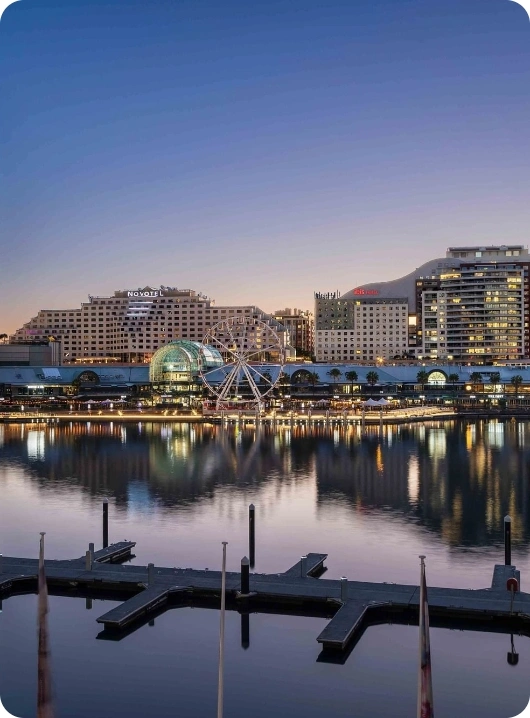
Transforming Novotel Sydney Darling Harbour
PROFITS ANCHORED
IN GROWTH
+$2,506,999
Additional revenue achieved in 3-years.
“We’ve seen a significant increase in RFP enquiries, occupancy rates, and ancillary revenue through food and beverage. The tailored approach has delivered impressive results that exceed our expectations. I highly recommend their services to any hotel or convention centre looking to elevate their MICE offerings”

TRICIA CORNELIUS
Regional Director of Sales & Marketing
Queensland & Northern Territory
Accor