
Winter Is Here for Hotel Restaurants and Bars: How to Keep the Bookings Coming When Demand Slows
Nick Hollows, Partnerships Director, OmniHyper
Winter Is Here for Hotel Restaurants and Bars: How to Keep the Bookings Coming When Demand Slows
Winter brings predictable pressure to hotel restaurants and bars. Terraces empty out, walk-ins dry up, and corporate bookings soften. Travellers stay closer to the hotel, but they still compare their options before deciding where to eat, drink, meet, or celebrate.
The real challenge isn’t that demand falls. It’s that demand becomes more deliberate. Guests are still searching, still asking for recommendations, still comparing menus and photos before they choose. Winter just raises the bar for being the obvious choice.
Drawing on the 2026 Restaurant Industry Trends Report from DoorDash and SevenRooms, based on a survey of more than 3,000 U.S. consumers, alongside OmniHyper’s own work improving local visibility, AI discovery, and direct bookings for hotel restaurants and bars, the pattern is consistent: the venues that hold up best in winter are the ones that are easiest to find, easiest to understand, and easiest to book.
Here’s where to focus.
Be where guests are already looking
51% of consumers now discover restaurants through Google search. Increasingly, they’re also asking AI: 22% of consumers have already used a tool like ChatGPT or Google Gemini to help choose where to eat, not with “restaurant near me” but with questions like “where should I go for a cosy dinner tonight” or “which restaurant has a private dining room for ten.”
Hotel restaurants face a particular blind spot here. Locals often assume the restaurant is only for hotel guests; travellers may not realise the hotel has a strong dining offer at all. In a stronger trading period, foot traffic and brand demand paper over that gap. In winter, it shows.
Two things need to be true. First, your Google Business Profile, opening hours, menus, and booking links need to be accurate and complete, which is what Zone is built to fix, tightening the local signals, listings, citations, reviews, and photos, that determine whether you show up when someone nearby is already searching. Second, your website and content need to answer the actual questions guests are putting to AI tools, not just rank for keywords, which is what AI Source does, structuring your menu, occasions, and offers so AI platforms can understand and recommend you. The goal isn’t to rank. It’s to be the answer.
Let the menu and photos do the selling
Menus and photos aren’t just operational information; they’re commercial content. 60% of consumers say the menu and type of food drive their decision to book a new restaurant, and 93% say a detailed, appealing description changes what they order. Photos carry similar weight: 87% of consumers say an appealing photo or video swayed their choice, and that instinct doesn’t switch off when someone is scrolling your Google Business Profile deciding whether tonight’s the night.
For winter, that means seasonal dishes, set menus, private dining options, and winter cocktails need to be described properly, shown in current photos, and readable on mobile, not buried in a PDF. A beautiful menu nobody can find or read does no commercial work at all.
Package value instead of discounting
When trade softens, discounting is the easy lever, but it’s rarely the best one. Guests will pay more for the right experience: 30% would pay more for special-occasion packages, 25% for preferred seating, and 24% for limited-time seasonal menus. It pays off twice over, too: reservations with prepaid upgrades spend 16% more per cover than those without.
Hotel venues are well placed to do this: wine-pairing dinners, fireside or window-table experiences, pre-theatre menus, group celebration packages, premium seating add-ons. The job is to make these easy to discover and book, not hidden in a one-off social post.
Fix the leaks in your booking path
Visibility only matters if the booking journey converts. 64% of diners still call to book, yet 40% of restaurant calls go unanswered. Add an outdated phone number, a hard-to-find booking link, or buried private dining details, and guests move on to whoever’s easiest. That matters more in winter, when every enquiry counts.
Bring past guests back
New demand isn’t the only lever. 65% of consumers say a restaurant remembering their preferences would change how often they choose it, and 63% say a specific recommendation or follow-up is what brought them back. A winter menu launch, a private dining reminder, or a corporate lunch offer sent to the right segment is often more efficient than chasing new guests from scratch.
The venues that win winter are the ones guests can find, understand, and book
None of this requires bigger discounts or waiting out the season. It requires being visible when someone’s already searching, clear when they’re comparing, and frictionless when they’re ready to book.
We recently modelled this for a hotel restaurant attached to a major international airport. Searches for its own cuisine type were modest on their own. But once we mapped total local dining demand, Google Maps and “near me” behaviour, and the captive in-transit audience already walking past the door, the analysis pointed to a combined revenue opportunity of more than $480,000 a year that the venue wasn’t currently capturing.
That’s what our free local-visibility and AI-discoverability audit gives you: not a generic checklist, but your venue’s actual local demand volume, where you sit against named competitors, and a revenue opportunity model built around your own location and numbers. No obligation, just a clear picture of what’s achievable this winter.

Nick Hollows
Partnerships Director
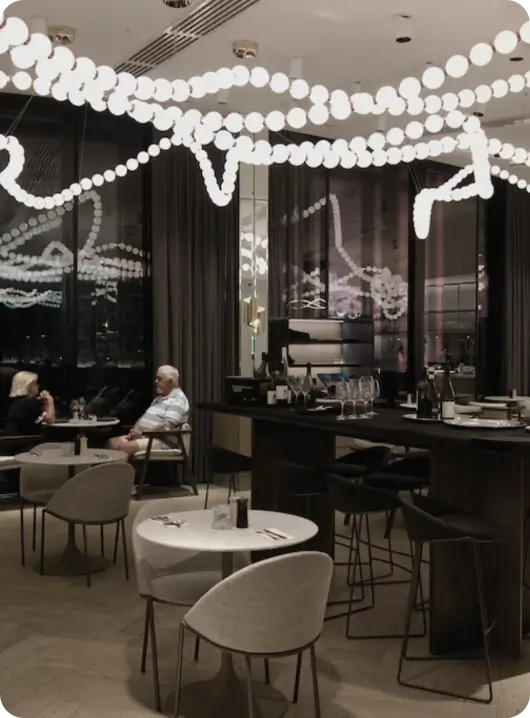
Transforming : Te Kaahu, Pullman Auckland Airport
FINE DINING,
BOLD HORIZONS.
+$26,670

DIANE KERINS
General Manager
Millennium Hotel & Resort Manuels Taupo