
Transforming Novotel Sydney City Centre
Preparing for Head Office Review: How to Support Digital Marketing Budget Lines with Commercial Evidence
Nick Hollows
Partnerships Director, OmniHyper
Aug 11, 2026
14 MIN READ
Preparing for Head Office Review: How to Support Digital Marketing Budget Lines with Commercial Evidence
Once the first hotel budget draft has been built, the conversation moves into a different stage.
The digital marketing line items are no longer just internal recommendations.
They now need to be reviewed, questioned, compared and supported.
This is where head office review becomes important.
At hotel level, the question is often whether the line item supports the property’s business plan. At head office level, the question becomes more structured. Does the line align with the budget guideline? Does it support the commercial strategy? Is there evidence behind the recommendation? Is the hotel duplicating something already available through the brand, region or group? Is the value clear enough to justify the cost?
That is why digital marketing lines need more than a good idea behind them.
They need commercial evidence.
A hotel may have already identified a clear need to improve direct booking growth, reduce OTA reliance, increase meetings and events enquiries, support conferencing demand, improve local search visibility, grow external F&B capture, or prepare for AI-led discovery.
But before that line moves further through the approval process, it needs to be explained in a way that head office can assess. That is the role of this stage.
Head office review is not only about defending spend.
It is about making the logic easy to understand.
This article is part of The Hotel Budget Approval Guide.
This article is Guide 4 in The Hotel Budget Approval Guide, a five-part series designed to help hotel teams prepare, structure, support and explain digital marketing investment through the annual budget process.
The full series includes:
- The Hotel Budget Approval Guide: How to Prepare Digital Marketing Line Items Before the Review Cycle Begins
- When the Budget Guidelines Arrive: How Hotel Teams Should Review Their Marketing Levers Before Building the Budget
- Building the First Hotel Budget Draft: How to Turn Digital Marketing Ideas into Defensible Line Items
- Preparing for Head Office Review: How to Support Digital Marketing Budget Lines with Commercial Evidence
- Taking the Budget to Owners: How to Explain Digital Marketing Investment in Commercial Terms
Each guide follows a different stage of the process, from the release of the brand budget guidelines through to hotel-level drafting, head office review and owner approval.
This guide focuses on the first draft: how hotel teams can turn digital marketing priorities into budget lines that are clear, commercially grounded and easier to support through the next stages of review.
Head office review tests the logic.
A strong head office review process should test the logic behind the budget.
That is the point.
The hotel may understand its local market, its demand gaps, its conversion challenges and its commercial priorities. Head office may be looking across multiple properties, brands, owners, budgets and regional expectations.
Both views matter.
The hotel should not approach head office review as a hurdle to get around. It should approach it as the next stage of proving that the line item is commercially relevant, properly considered and aligned to the outcomes the hotel is expected to deliver.
That means the hotel needs to be ready to explain the line clearly.
Not in technical language.
Not in supplier language.
Not as a trend or opportunity.
But as a business case connected to the hotel’s commercial objectives.
The evidence should match the line item.
Not every digital marketing line needs the same type of evidence.
A line item for AI Search should not be supported in the same way as a line item for paid media. A hyperlocal visibility program should not be explained in the same way as a website build. A meetings and events visibility program should not be judged only by the same metrics as accommodation search.
This is where many budget conversations become too generic.
The hotel may say a line item is important, but not provide the specific evidence that makes it important.
If the line item is designed to support direct booking growth, the evidence should show where direct demand is coming from, where it is being lost, how OTA reliance is changing, and whether owned visibility is strong enough.
If the line item is designed to support AI Search, the evidence should show how guest discovery is changing, whether the hotel is being found or referenced in AI-led environments, whether the hotel or an OTA controls the citation, and whether competitors are appearing more often in recommendation-led journeys.
If the line item is designed to support meetings and events, the evidence should show whether planners can find the hotel for relevant searches, whether the content answers the right questions, and whether the enquiry pathway is strong enough. If the line item is designed to support F&B as a destination venue, the evidence should show whether the restaurant or bar is visible to external guests, not only in-house guests.
If the line item is a website, content or technical project, the evidence may show that the current site is preventing search engines, AI platforms or guests from understanding the hotel’s offer. This may include missing schema, weak FAQ content, outdated positioning, poor page structure or broken content pathways.
The evidence does not need to be excessive.
But it does need to be relevant.
A simple way to structure the evidence is to answer six questions:
- What is the line item?
- What commercial objective does it support?
- What shortfall, risk or opportunity does it address?
- What evidence supports the recommendation?
- What will the hotel measure?
- Why does this need to be included in the budget now?
For example, a hotel may recommend reallocating traditional SEO spend into an AI Search and Direct Booking Visibility Program. The line item is not being proposed because AI is new. It is being proposed because the evidence shows that traditional search demand is declining, guests are discovering hotels through AI-led answers, and OTAs may be capturing the citation or click before the guest reaches the hotel’s own website.
In that case, the commercial objective may be to protect and grow direct bookings. The shortfall may be that the hotel is ranking well in traditional search but still losing visibility and direct demand because fewer guests are clicking through traditional search results. The evidence may include declining keyword search volume, lower organic click-through, low AI presence, weak owned citation share, OTA citation dominance, competitor visibility, and estimated direct revenue leakage.
The hotel is not asking head office to fund a new trend.
It is asking to reallocate budget from a line item that no longer fully reflects how demand is being created, into a line item designed to protect visibility and direct booking opportunity in the next version of search.
This turns the budget conversation from opinion into evidence.
New or unlisted lines need education before approval.
Some digital marketing lines will be familiar to head office.
Others will need more explanation.
This is especially true when a line item is new, property-led, not included last year, or not clearly named in the current budget guideline.
That does not make the line unsuitable.
It means the hotel needs to provide education before asking for approval.
AI Search is a good example.
If the hotel presents AI Search as a new digital marketing trend, it may be easy to challenge. If the hotel presents it as a visibility and direct booking issue, the conversation becomes more useful.
The point is not that AI is new.
The point is that guest discovery is changing.
Travellers are asking more recommendation-led questions. They are comparing hotels before reaching the booking engine. They are using AI-led summaries, local results, maps, reviews, destination content and third-party sources to form a shortlist before they visit brand.com.
If the hotel is not visible or accurately represented in those environments, there may be a commercial risk.
That is the case that needs to be explained.
The same principle applies to hyperlocal visibility, meetings and events search visibility, property-level discovery programs, restaurant destination visibility, and other digital lines that may not fit neatly into a traditional budget category.
The line may be new.
The need may not be.
Show what happens if the line is not funded.
A strong budget case should not only explain the upside.
It should also explain the risk of doing nothing.
This does not need to be dramatic. It should be practical.
If a hotel does not invest in direct booking visibility, what happens to channel mix? If it does not improve local search visibility, what happens to local demand capture? If meetings and events content remains weak, what happens to planner enquiries? If a restaurant or bar has limited digital presence, what happens to external guest growth? If the hotel does not understand its AI Search visibility, what happens as discovery shifts into recommendation-led environments?
This is often where digital marketing becomes more commercially relevant.
The question is not only what the hotel may gain.
The question is also what the hotel may continue to lose if the shortfall is not addressed.
That might include avoidable OTA reliance, weaker direct demand, missed MICE enquiries, poor local discovery, lower F&B visibility, or reduced influence earlier in the guest decision journey.
A budget line becomes easier to assess when head office can see both sides of the decision.
Be clear on what will be measured.
Evidence is not only used before approval.
It also sets up how the line will be reviewed later.
That is why every digital marketing line should have a measurement plan.
The measurement does not need to be perfect, but it does need to be credible.
For direct booking growth, measurement may include direct traffic, booking engine engagement, web direct revenue, channel mix and OTA reliance.
For AI Search, measurement may include visibility across AI-led responses, citation presence, accuracy of representation and competitor comparison.
For hyperlocal visibility, measurement may include Google Business Profile actions, map visibility, calls, direction requests and booking actions.
For meetings and events, measurement may include planner traffic, venue page engagement, enquiry volume and lead quality. For F&B, measurement may include local search visibility, booking actions, direction requests, external covers and outlet-level revenue contribution.
The key is to choose measures that match the purpose of the line item.
A visibility program should not be judged only by last-click revenue.
A content program should not be judged only by page views.
An AI Search program should not be judged only by traditional SEO rankings.
Prepare for the questions before they are asked.
The best time to prepare for head office questions is before the review meeting.
For any digital marketing line that is new, increased, reframed or not clearly listed in the guideline, hotel teams should expect questions.
That is not a bad thing.
It is part of the review process.
The hotel should be ready to explain:
- Why this line is needed now.
- What commercial target it supports.
- What current activity is not solving the issue.
- Whether the line duplicates anything already available.
- How the hotel will measure success.
- What happens if the line is not funded.
These questions are not only there to challenge the line.
They help improve it.
A line item that cannot answer these questions may need to be refined before it is included. A line item that can answer them clearly is much easier to support through the next stage of the budget process.
Commercial evidence makes the review more useful.
Head office review should not be seen as the point where digital marketing lines are defended at the last minute.
It should be the point where the commercial logic is tested.
That is a good thing.
A strong digital line item should be able to stand up to that test.
The key is evidence.
Not evidence for the sake of paperwork.
Evidence that helps head office understand why the line matters, why it belongs in the budget, and how it supports the hotel’s commercial objectives.
That is how the budget conversation becomes more productive.
Would you like commercial evidence to support your hotel’s next digital marketing budget?
If your hotel is preparing for head office review and needs a clearer business case for AI Search, hyperlocal visibility, direct booking growth, OTA channel shift, meetings and events demand, conferencing visibility or F&B as a standalone destination venue, OmniHyper can help assess the opportunity and structure the commercial case.
For hotels specifically reviewing AI Search visibility, OmniHyper can provide an AI Visibility and Commercial Impact Report.
This assessment helps hotel teams understand:
- How visible the hotel is across AI-driven discovery
- Whether the hotel, brand.com, OTAs or third-party platforms control the narrative
- How the hotel compares against its competitors
- Where direct demand may be leaking into indirect channels
- The potential direct revenue opportunity available
For dedicated AI Search visibility assessments, request an AI Visibility and Commercial Impact Report.
For wider conversations, including hyperlocal assessments, digital marketing reviews, budget support or general enquiries, contact us today.

Nick Hollows
Partnership Director
Nick brings 15+ years of experience working with hundreds of hotels worldwide, helping drive performance and direct revenue. As Partnerships Director at OmniHyper, he’s known for his strategic and commercially focused approach.
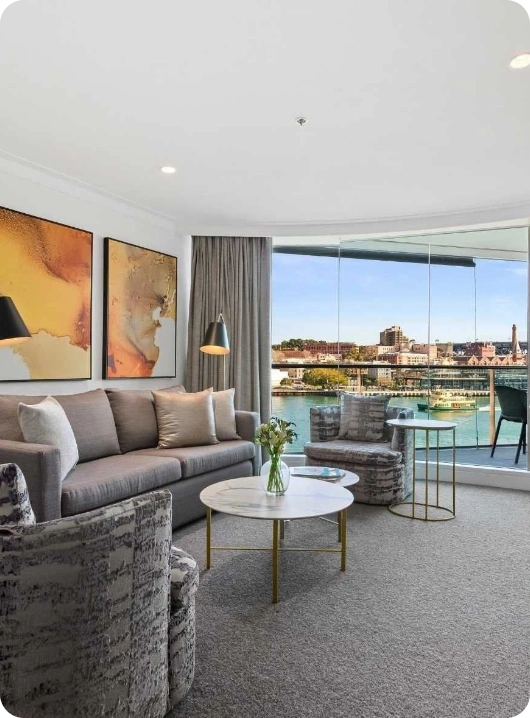
Transforming Pullman quay grand Sydney Harbour
HARBOURFRONT LUXURY,
REVENUE
UNLOCKED.
+$1,363,219
Additional revenue, first 12-months.
“Working with HyperHotels for over 10 years has been a game changer for us. Their team truly understands the hospitality industry, and their website solutions have driven significant direct revenue growth. I couldn’t ask for a better partner to help us succeed online.”

DIANE KERINS
General Manager
Millennium Hotel & Resort Manuels Taupo